



The gut microbiome is involved in digestion and is an active area of research. Symptoms such as bloating or changes in bowel habits have many possible causes. They cannot establish that a person's microbiome is “out of balance” without proper clinical assessment.
Seven things worth noticing
- Persistent bloating: Keep track of timing, food and other symptoms. Bloating can have several causes.
- Changes in bowel habits: Constipation, diarrhoea or alternating patterns deserve attention when they persist.
- Abdominal discomfort: Note where, when and how often it occurs rather than assuming one cause.
- Recent antibiotic use: Antibiotics can affect gut microorganisms, but symptoms still need their own assessment.
- Dietary changes: Fibre intake and food tolerance can influence digestion. Make gradual changes that suit you.
- Sleep and stress: These can affect how symptoms feel, without identifying a specific microbiome problem.
- Symptoms affecting daily life: Repeated or worsening symptoms are a reason to seek professional advice.
Fatigue, mood changes, skin problems and sugar cravings are not reliable standalone tests of “dysbiosis.” Avoid diagnosing yourself from a symptom list. Seek prompt medical advice for alarming or persistent symptoms, including blood in stool, unexplained weight loss or severe pain.
Where probiotics fit
Probiotics are live microorganisms that may be useful in some circumstances, but effects depend on the specific strain, formulation and condition. The NIH overview of probiotics explains why broad claims about digestive, immune or mood benefits are not justified for every product.
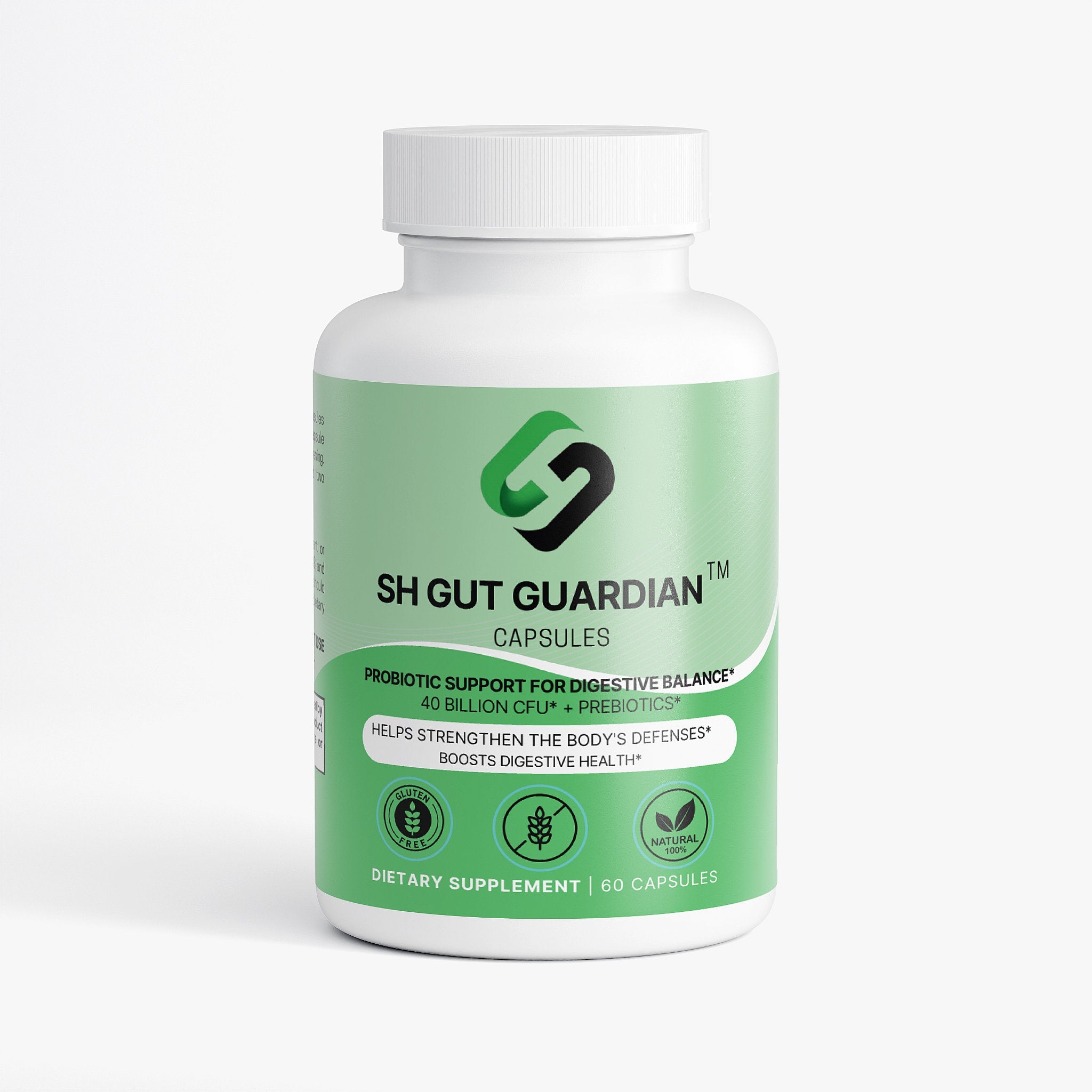
SH Gut Guardian is our probiotic and prebiotic blend. Read the current label and discuss it with a clinician if you have an underlying condition or a weakened immune system. It is not a substitute for investigating persistent symptoms.
These statements have not been evaluated by the Food and Drug Administration. The product is not intended to diagnose, treat, cure or prevent any disease.

